PREVIOUS
Comms Connect Melbourne Sets New Attendance Record with More Than 1,800 Industry Participants



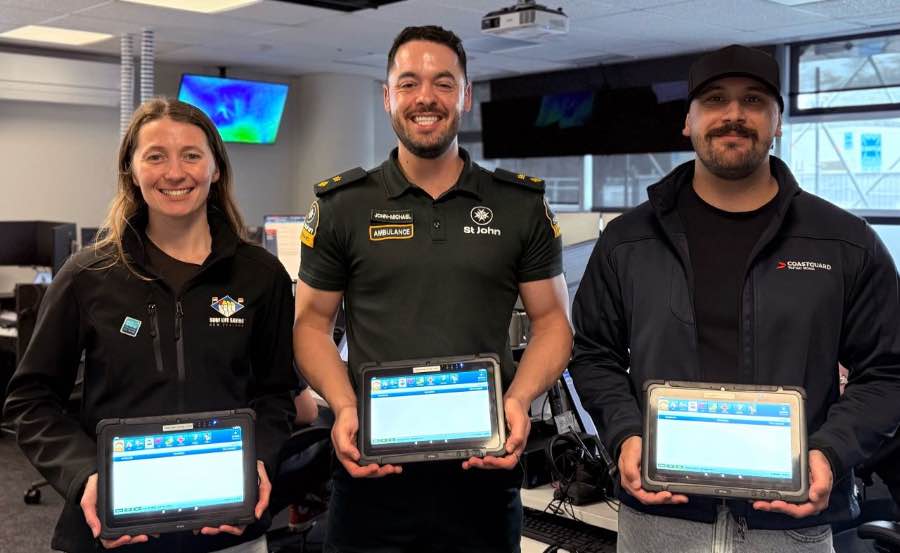
New Zealand — October 2026 — New Zealand has introduced two national agreements connecting ambulance communications centres with Surf Life Saving New Zealand (SLSNZ) and Coastguard Tautiaki Moana, establishing a more integrated approach to emergency response across the country's coastal and marine environments.
The agreements enable ambulance services to share incident information directly with marine rescue partners through secure communications technology, helping emergency responders coordinate more quickly, improve situational awareness and mobilise the most appropriate resources. The arrangements bring together Hato Hone St John, Wellington Free Ambulance, Surf Life Saving New Zealand and Coastguard Tautiaki Moana under a consistent national framework for information sharing and operational coordination.
The first agreement connects Hato Hone St John and Wellington Free Ambulance with SLSNZ's national operations and communications centre, SurfCom, located at Auckland's Marine Rescue Centre. Through a secure communications network, incidents reported to ambulance services involving beaches or coastal waters can be shared directly with SurfCom, enabling communications personnel to mobilise surf lifeguards for rescue, first aid and other emergency assistance.
The nationwide arrangement builds on a pilot programme launched in 2018 between Hato Hone St John and SLSNZ, which initially covered the northern part of New Zealand. The programme has since contributed to more than 150 lives being saved, while thousands of additional patients have received timely care. The new agreement extends the arrangement nationwide and incorporates Wellington Free Ambulance for the first time.
With more than 90 patrol locations operating during summer and 40 search and rescue squads available for mobilisation around the clock, SLSNZ can provide additional emergency response capabilities in coastal communities and other locations where lifeguards may be able to reach patients before ambulance personnel arrive.
Direct incident information sharing also enables surf lifeguards to respond to medical emergencies beyond traditional beach patrol areas, including incidents requiring first aid and defibrillation while awaiting paramedic support.
The second agreement establishes a national framework between Hato Hone St John and Coastguard Tautiaki Moana, connecting Coastguard's National Operations Centre through the same technology to facilitate timely, coordinated information exchange with ambulance services.
The arrangement introduces a nationally consistent, vessel-based coordinated response model for medical incidents in locations accessible only by water. It enables ambulance clinicians and Coastguard volunteers to coordinate patient access, medical transport and transfers to shore-based ambulance services from the outset of an incident.
This capability is particularly relevant to patients on islands, vessels and remote coastal locations who require medical assessment or transport but may not be facing an immediate life-threatening emergency. Direct notification allows Coastguard to plan vessel deployment, coordinate with ambulance personnel and arrange an appropriate handover once the patient reaches shore.
The agreement represents the first national-level arrangement between Hato Hone St John and Coastguard Tautiaki Moana, replacing previously variable regional coordination practices with a consistent approach.
Previously, ambulance communications centres often relied on telephone calls to notify marine response partners about incidents or communicate changes in patient locations and operational circumstances. The new arrangements enable dispatchers to share incident details and updates more directly, reducing communication delays and the potential for information transfer errors.
The common framework supports earlier activation of surf lifeguards and Coastguard resources, improved coordination between emergency response teams and more efficient allocation of personnel and equipment. It also helps ensure that the appropriate marine response capability can be incorporated into an incident from the earliest stages.
For remote coastal communities, where conventional ambulance resources may take longer to reach patients, closer integration between ambulance services and marine rescue organisations can provide additional pathways to timely emergency assistance.
The agreements reflect coordinated work across all four organisations to establish common arrangements for governance, privacy, operational procedures, information sharing and incident activation.
By creating a consistent national framework, Hato Hone St John, Wellington Free Ambulance, Surf Life Saving New Zealand and Coastguard Tautiaki Moana are strengthening the integration of emergency communications and marine response capabilities across New Zealand.
The initiative demonstrates how secure, technology-enabled information exchange can improve interoperability between emergency service organisations, accelerate operational coordination and support more effective responses to incidents across complex coastal and marine environments.