PREVIOUS
NO MORE



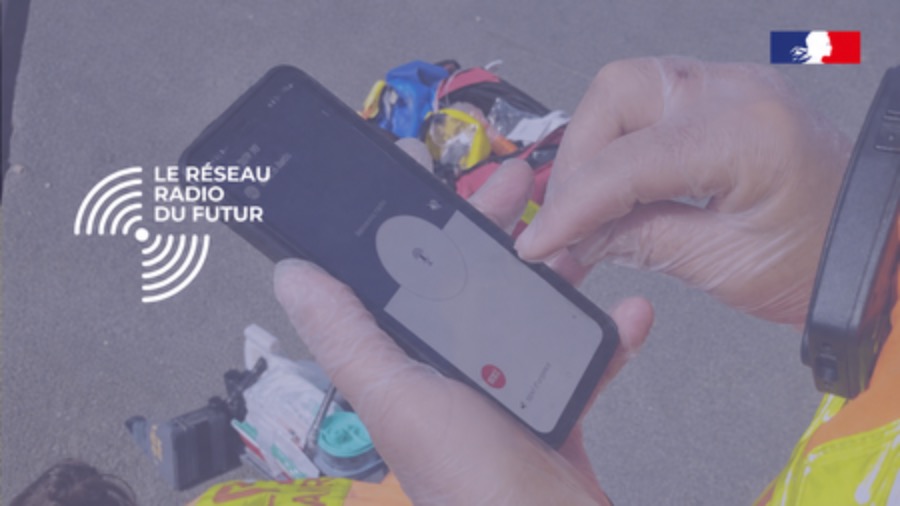
France is advancing the deployment of its Future Radio Network (Réseau Radio du Futur, RRF), a mission-critical mobile communications infrastructure designed to strengthen secure and resilient communications for security forces, emergency services and healthcare professionals.
Leveraging the networks of French mobile network operators, the RRF is designed to provide high-speed connectivity, prioritised communications and interoperability between frontline services. Its capabilities extend beyond voice communications to include messaging, image and video sharing, location information and conferencing, supporting more effective coordination during routine operations and major emergencies.
The programme represents a significant step in the modernisation of France’s public safety communications infrastructure, as emergency services increasingly require reliable access to real-time information and digital applications in the field.
The RRF uses the infrastructure of French mobile network operators, selecting the best available coverage to support operational communications. The network is designed to address situations in which public mobile networks experience degraded service or lack coverage, with additional coverage mechanisms intended to address these limitations.
Security is a core element of the system, with communications encrypted to protect operational information. High-speed data connectivity also enables frontline personnel to exchange multimedia content and access applications that support situational awareness, coordination and incident management.
To oversee the development, commissioning and deployment of the network, the French government established the Agency for Operational Mobile Communications for Security and Emergency Services (ACMOSS). The agency is responsible for coordinating the infrastructure and supporting its operational readiness.
The RRF is already supporting operational activities across different public safety and emergency response organisations in France. Its applications include secure communications, navigation, operational mapping, multimedia information sharing and the preparation of patient assessments.
“Teams use the RRF every day during operations for secure, priority communications, as well as for other applications such as navigation, access to operational mapping and the preparation of patient assessments. This progressive expansion enables us to support frontline users while ensuring the operational continuity of the service provided to the public.” - Captain Julien Legrand, Head of the Epagny Fire and Rescue Centre, Haute-Savoie Departmental Fire and Rescue Service (SDIS 74)
The network is also helping police organisations improve the transmission of operational information to control rooms, enabling personnel to report activities through multiple communication channels.
“The Future Radio Network enables personnel to report on their activities through every available means: voice messages, radio, videos, text messages, photographs and more. This allows our control room managers to prepare operational logs.” - Gaël Kardasik, Director of the Intermunicipal Police, Metz European Metropolitan Area
Healthcare emergency services are another important user group. SAMU 42, the emergency medical service serving the Loire department, has been operating entirely on the RRF since October 2025, addressing the need for secure communications during both everyday operations and crisis situations.
“Since October 2025, SAMU 42 has been operating entirely on the Future Radio Network. This addressed an everyday operational need: securing our communications both during crises and under normal operating conditions.” - Nicolas Desseigne, Head of SAMU 42, University Hospital Centre of Saint-Étienne
RRF deployment is progressing across multiple public safety and transport organisations. Current initiatives include a new phase of deployment within the Paris Police Prefecture, full operational adoption by the Charente Departmental Fire and Rescue Service, and the progressive rollout of the network within RATP, the Paris public transport operator.
The Charente Departmental Fire and Rescue Service is identified as the first departmental fire and rescue service in France to adopt the RRF for 100% of its operational use, marking an important milestone in the transition towards next-generation public safety communications.
France’s RRF programme has set ambitious deployment objectives for 2026. According to the programme figures, the network is targeting approximately 86,000 subscribers by the end of the year, with around 40 departments engaged in deployment.
The programme also cites 98% national coverage and access to approximately 127,000 mobile base stations across French mobile network operators.
These targets highlight the scale of the infrastructure underpinning France’s transition towards more advanced mission-critical mobile communications. By combining secure voice services with broadband data and operational applications, the RRF is intended to help security forces, emergency responders and healthcare professionals exchange information more efficiently and coordinate their activities more effectively.
As deployment continues, the RRF will play an increasingly important role in France’s public safety communications ecosystem, demonstrating how commercial mobile network infrastructure can be leveraged to support the demanding requirements of mission-critical services.
Read the full news