PREVIOUS
First CE appointed to new government entity uplifting communication capability of NZ’s public safety sector



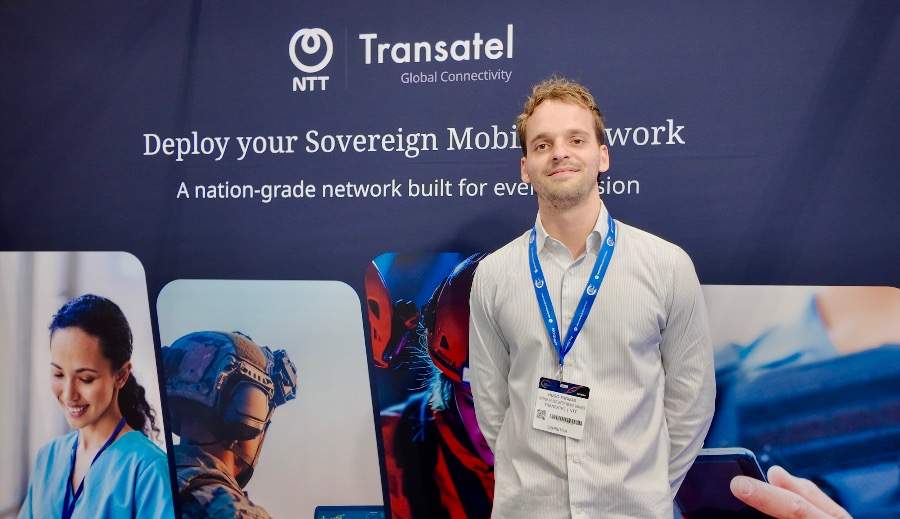
LONDON, June 2026 – During Critical Communications World 2026, MCXTEND and Comunicaciones Críticas, two of the leading international media platforms serving the mission and business-critical communications sectors, conducted an exclusive interview with Hugo Thomas, Industry Lead for Defense & Public Safety at Transatel, an NTT company.
The discussion focused on the evolving requirements of mission-critical communications, the growing importance of secure IoT connectivity, the role of Cellular Secure Access Service Edge (SASE), and emerging opportunities for public safety agencies, defense organizations, transportation operators, utilities, and critical infrastructure providers worldwide.
As organizations accelerate digital transformation and deploy increasing numbers of connected devices, vehicles, sensors, and operational technologies, ensuring secure, resilient, and globally available connectivity has become a key operational priority.
Q: Can you provide background on what Transatel does and where it fits within the critical communications ecosystem?
Hugo Thomas: As part of NTT Group, Transatel is a global cellular connectivity solutions provider and a leading MVNO enabler. We operate our own international mobile core network and provide multi-network connectivity across more than 200 countries and territories.
Within the critical communications ecosystem, our role is to ensure that devices, vehicles, field personnel, and mission-critical applications remain connected wherever they operate. We work alongside device manufacturers, system integrators, mobile operators, and public safety organizations to deliver resilient and secure connectivity for demanding operational environments.
Q: What are the biggest connectivity challenges facing large-scale IoT deployments today?
Hugo Thomas: The first challenge is resilience. Many organizations still depend on a single operator, which creates a single point of failure.
The second challenge is global consistency. Large fleets often operate across multiple countries and networks, making deployment and management complex.
Finally, security has become a major concern. As more critical assets become connected, organizations need greater visibility and control over how data travels through the network.
Q: Which IoT sectors are experiencing the fastest growth?
Hugo Thomas: We're seeing strong growth across several sectors, but utilities, transportation, and public safety stand out.
Utilities are accelerating smart grid modernization and remote infrastructure monitoring. Transportation continues to expand through connected fleets and operational digitization. At the same time, governments and public safety organizations are increasingly investing in resilient mobile connectivity to support emergency response, critical infrastructure protection, and mission-critical operations.
What all these sectors have in common is the need for highly reliable and secure connectivity.
Q: Why is embedding security directly into the cellular network more effective than adding security layers after connectivity is established?
Hugo Thomas: The closer security is to the network itself, the earlier threats can be identified and mitigated.
Traditional approaches often rely on protecting traffic only after it reaches a VPN gateway or a corporate network. By integrating security into the cellular connectivity layer, organizations gain better visibility, stronger control, and more consistent protection across all connected devices.
This becomes especially important when managing thousands of distributed endpoints operating in the field.
Q: For years, organizations treated connectivity and security as separate layers. Does the growth of IoT and mission-critical applications mean that security must now become an inherent feature of the cellular network itself?
Hugo Thomas: Absolutely. As organizations connect more operational technologies, vehicles, sensors, and field devices, connectivity and security become inseparable. Every connected endpoint represents a potential attack surface.
Mission-critical environments require security to be embedded from the beginning of the communication chain, not added afterward. The objective is to ensure that every connection is authenticated, monitored, and controlled throughout its lifecycle.
Q: How does Cellular SASE improve the security posture of mission-critical communications networks compared to traditional VPN-based architectures?
Hugo Thomas: Traditional VPNs were designed for a world where users connected back to a central corporate network.
Today, devices are distributed globally and often communicate directly with cloud applications or operational platforms. Cellular SASE brings network connectivity and security together by applying consistent security policies directly at the network edge.
This enables organizations to implement Zero Trust principles, improve visibility across connected assets, and reduce the complexity associated with managing large VPN infrastructures.
Q: Looking towards the future, where do you see the biggest growth opportunities in IoT for critical communications over the next few years?
Hugo Thomas:Three areas stand out.
First, the convergence of public and private cellular networks, allowing organizations to extend secure communications beyond the boundaries of dedicated infrastructure.
Second, the increasing demand for resilient multi-network connectivity, especially for public safety, defense, and critical infrastructure operators.
Third, greater control over communications through concepts such as sovereign mobile networks, where organizations seek more ownership over their connectivity, policies, and network resources.
Ultimately, the future is about providing connectivity that is not only available everywhere, but also secure, resilient, and adapted to mission requirements.
Key Takeaways from the Interview
The exclusive interview with Hugo Thomas highlights several major trends shaping the future of critical communications:
Growing demand for resilient multi-network cellular connectivity.
Increased adoption of IoT across public safety, utilities, transportation, and critical infrastructure.
Rising importance of cybersecurity at the connectivity layer.
Growing interest in Cellular SASE and Zero Trust architectures.
Convergence of public and private mobile networks.
Emergence of sovereign mobile network models for mission-critical users.
As broadband technologies continue to transform the critical communications landscape, organizations are seeking solutions that combine connectivity, security, resilience, and operational control into a unified framework.
Speaking with MCXTEND and Comunicaciones Críticas at CCW 2026, Hugo Thomas emphasized that the future of mission-critical communications will be defined not only by ubiquitous connectivity, but by connectivity that is secure, resilient, and purpose-built for operational and public safety requirements.