PREVIOUS
FirstNet Powers First Responders At The Big Game in Santa Clara



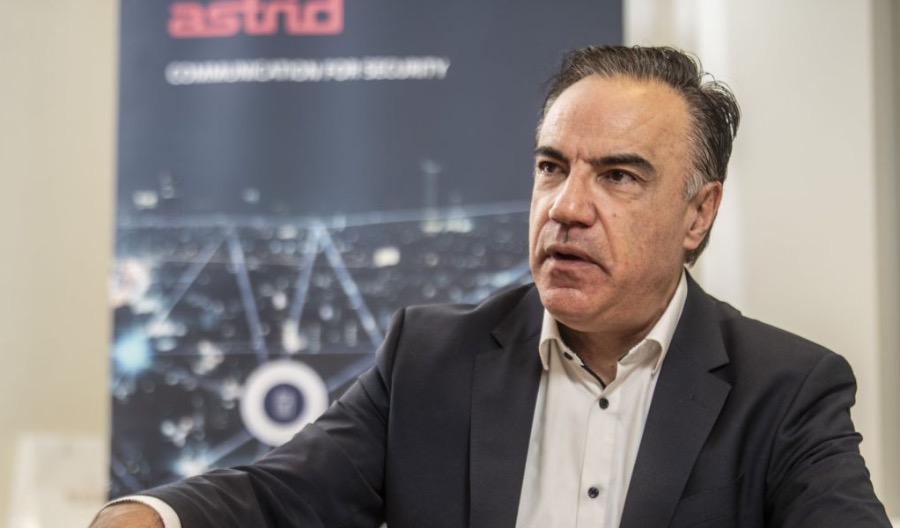
In the field of critical communications, innovation is not measured by the novelty of gadgets or the pace of product launches. Its true value only becomes apparent when the stakes are genuinely critical: during crisis situations, peak traffic loads, or system failures. At ASTRID, reliability is not a barrier to innovation, but a prerequisite. Salvator Vella, Chief Executive Officer, looks ahead to a pivotal year and explains how ASTRID’s approach differs from that of traditional IT companies and telecommunications operators.
2026 is shaping up to be a crucial year. What key developments can we expect?
“This year will be defined by fundamental choices. We will award two major public procurement contracts: one for NextGenCom (the transition from TETRA to broadband) and one for the modernisation of control rooms (PSAPs). At the same time, we will select the partners who will work with us to shape the future of secure communications in Belgium. These decisions are the result of years of strategic and technological preparation, underpinned by strong governance and close involvement of our users.
At the same time, our core priority remains unchanged: ensuring that existing systems remain robust, stable and fully operational. The number of incidents, such as service interruptions, has been declining for years and is now at a historically low level. This is no coincidence, but the outcome of continuous focus on reliability. This solid foundation is a prerequisite for any strategic innovation.”
ASTRID is a technology-driven organisation operating in a critical environment. How does your approach differ from that of traditional IT or telecommunications companies?
“The fundamental difference lies in our core mission. Traditional IT or telecommunications companies operate in a competitive market, driven by profit and market share. ASTRID, by contrast, serves public authorities as well as emergency and public safety agencies—and, by extension, every citizen. Our users rely every day on secure communications over the ASTRID network. They do not need flashy, ‘bling’ solutions, but systems that are reliable, secure and permanently available.
This means they must continue to function during crises, periods of congestion, technical failures or even the failure of supporting infrastructure. This absolute priority given to business continuity shapes our strategy, our approach and every decision we make.”
How does this orientation translate into design and development?
“Our network must continue to operate when all others fail. That is why we always start from a fundamental question: what happens in the event of a convergence of crises? A service interruption at ASTRID is never purely technical. It can delay an emergency response, complicate coordination or put lives at risk. We analyse every crisis situation from two perspectives: operational and technical. Crisis situations typically lead to a massive concentration of communications in one single location, with a real risk of network saturation. Our network is designed to remain operational even under such conditions. Take flooding, for example, which can cause power outages or the failure of other supporting infrastructure. Our systems must be able to withstand that as well. We always design our solutions starting from the worst-case scenario. Only afterwards do we consider normal operating conditions. This is a fundamentally different logic from that of commercial companies. They design and develop for ‘regular’ conditions and only adapt once a problem has already occurred.”
Does this rigorous focus on reliability not slow down innovation?
“At ASTRID, reliability always takes precedence over speed. Our solutions play a role in public safety and in the proper functioning of society. Does that make us less innovative? On the contrary. Our innovation strategy is very clear: we invest exclusively in proven technologies, innovations must deliver clear added value, and we never take irresponsible risks. For example, we could have chosen 3G or 4G as successors to TETRA, but these technologies did not meet the requirements of mission-critical communications. Only today does 5G, with its specific mission-critical features, offer sufficient guarantees. Progress based on immature technologies creates risks. In a critical environment, that is simply unacceptable. By waiting until technology is truly reliable, we avoid incidents, service interruptions and costly corrective measures afterwards. This is not about slowness, but about sustainable progress.”
How are decisions on innovation made?
“Every decision passes through three filters. First: is the technology sufficiently robust and reliable? Second: is it financially viable? Third: does it meet the real needs of users? Only when the answer is ‘yes’ to all three questions do we move forward. We do not answer these questions from an ivory tower, but in close consultation with users. There is one exception: cybersecurity. In that area, we assume full responsibility. System security is so fundamental that we make no compromises whatsoever. For all other projects, if they impact the daily work of emergency services, those users must be involved—from design and development through to implementation. That is how innovation truly meets operational realities in the field.”
Combining innovation with day-to-day operational reliability—doesn’t that require a delicate balancing act?
“A few years ago, we deliberately chose a bimodal organisational model. Some teams focus exclusively on future-oriented projects, such as the new broadband communication system (NextGenCom) or the modernisation of control rooms (PSAPs). Other teams are responsible for ensuring the stability and robustness of operational systems, so users can rely, minute by minute, on a network that performs exactly as it should. This approach prevents innovation from putting pressure on current operational needs—and vice versa.”
Critical communications must be available and secure at all times. Does that make ASTRID more expensive than commercial players?
“A network that can withstand crisis situations requires redundancy: additional capacity to absorb peak loads, fallback solutions, backup systems. That is a prerequisite for service continuity.
Commercial organisations take far less account of this. As a result, our solutions—and their cost—are not directly comparable. One example: a commercial telecom network can operate with a single data centre. We have three. Two are active and synchronised. The third is completely disconnected. Why? Because in the event of a major cyberattack, even synchronised systems can be compromised. At that point, you need a fully independent data centre to restart operations. That is how we keep the system running. Yes, this level of robustness comes at a cost. But it should not be seen as an expense—it is an investment in the safety of the people who work every day to protect citizens. Over the past 25 years, ASTRID’s TETRA network has remained operational during every major crisis in Belgium. That is no coincidence, but the result of continuous investment and improvement. Of course, our resources are not unlimited. Budgets are under significant pressure. This means we must be extremely careful in the choices we make and in the technology partners we work with. We must innovate strategically.”
What does “strategically innovative” mean in concrete terms for you?
“Our innovations are not always highly visible, but they have a very real impact. They all answer the same fundamental question: do they help citizens in distress and emergency services in the field? We do not develop technology for its own sake, but to improve processes. Many improvements lie in the details: how information is displayed, how operational workflows are organised, how quickly decisions can be taken under time pressure. By reducing the operational burden on emergency services and enabling them to work more efficiently, we allow them to fully focus on their vital mission. A good example is the recent deployment of Bosch’s private eCall solution. ASTRID was the first organisation in Europe to roll out the latest version and integrate it into Belgian control rooms. In the event of an accident, the system enables faster and more reliable transmission of critical information to first responder teams, such as the exact vehicle location. False calls are filtered out, reducing the workload for call takers and dispatchers in control rooms. This is a form of strategic innovation that shortens response times and saves lives.”
How does ASTRID differentiate itself from comparable operators in other countries?
“Two elements set us apart. First, in Belgium ASTRID is organised as a public limited company governed by public law. This gives us greater flexibility than if the technology were managed solely within a traditional public administration. In a context of rapid technological evolution, that flexibility is a major advantage. Second, the Belgian Parliament made a particularly visionary choice in 1998 with the ASTRID law. Rather than opting for an isolated technical solution, it chose a process-driven vision. ASTRID is responsible for the entire chain: from the emergency call made by a citizen to communication with emergency services in the field. More than 25 years later, this horizontal approach remains exceptional. It allows every second of the security chain to be optimised through a process-oriented logic and an end-to-end vision.”
Does this transversal approach also play a role in the integration between the modernisation of control rooms and NextGenCom?
“Absolutely. The modernisation of control rooms and the deployment of a broadband network are not separate projects. They are designed together so that call-taking, dispatching and communication with field teams are fully integrated. In many other countries, we see the opposite: fragmented systems, siloed operations with little overarching vision, and responsibilities spread across different departments and agencies. This confirms how visionary the choice made in 1998 was. This transversal approach remains one of our greatest strengths today. Integration allows us to eliminate potential inefficiencies across the communication chain, making information transfer faster and more accurate. Going forward, this integration will deepen even further—because for a citizen in distress, every second counts.”
What qualities are required of staff working in a critical environment?
“A strong user-centric mindset and a deeply ingrained ‘worst-case scenario’ reflex. Our people automatically think in terms of scenarios: what happens in the event of failure, a cyberattack, a technical or operational crisis? This mindset is embedded in our organisational culture. Many colleagues are also drawn to ASTRID because of its unique social mission—they find meaning in contributing to solutions that truly make a difference. Despite fierce competition for talent, we continue to attract strong profiles. Many employees have previously worked within emergency services or remain active as volunteers. Taking responsibility, striving for continuous improvement and setting high standards are deeply rooted values within our organisation. The same applies to our partners and suppliers, who must also meet strict quality requirements. We explicitly define these expectations in our specifications and contracts, with strict KPIs for reliability and security—because the robustness of a system depends on the strength of its weakest link.”
How do you see the longer-term evolution of ASTRID’s role?
“Our core mission will remain the development, management and maintenance of a critical communications network and control rooms. Given the extensive expertise we have built up, it is not inconceivable that ASTRID could ultimately become a centre of excellence for robust telecommunications technologies within the public sector. Essential functions such as critical communications are far too important to be entrusted to a private actor.”
This touches on another highly topical issue: digital sovereignty. How important is it to you?
“It is fundamental. The debate on digital sovereignty now occupies a central place in Europe. ASTRID launched this discussion very early on, with France, where the concept of sovereignty—or sovereign prerogatives—has long been deeply rooted. Digital sovereignty is about control over digital infrastructures, data and technologies that are essential for the State. Critical communications are directly linked to sovereign functions such as defence, justice and internal security. These are fundamental missions whose responsibility and control must remain in public hands. Digital sovereignty encompasses crucial elements such as technological autonomy, infrastructure management, the storage of critical data and control over access to that data. Metadata, by their very nature, are also extremely sensitive, as they contain precise information about interpersonal relationships, timelines and locations. Control over such data must remain with public authorities or organisations operating under their supervision. With commercial players—even if they are subject to Belgian law—this guarantee is lacking. Ownership structures and shareholdings can change at any time, and with them control. That entails risks. Autonomy and security must therefore always take precedence. While digital sovereignty is a hot topic today, it has been part of ASTRID’s DNA for more than 25 years.”
Finally, what message would you like to convey to public safety agencies and to political decision-makers?
“To public safety agencies: trust ASTRID. We are a partner that thinks along with you, supports you and develops solutions that strengthen and facilitate the work of first responders in the field. To political decision-makers: do not be swayed by short-term commercial promises. Security in our society depends on the police, firefighters, medical services, military and many others. Their effectiveness relies on secure and reliable communications. In a context of growing cyber threats and geopolitical uncertainty, reliability must always come first.”