PREVIOUS
TCCA Calls for Closer Cooperation Across the Sector to Maintain Resilience in a Volatile World



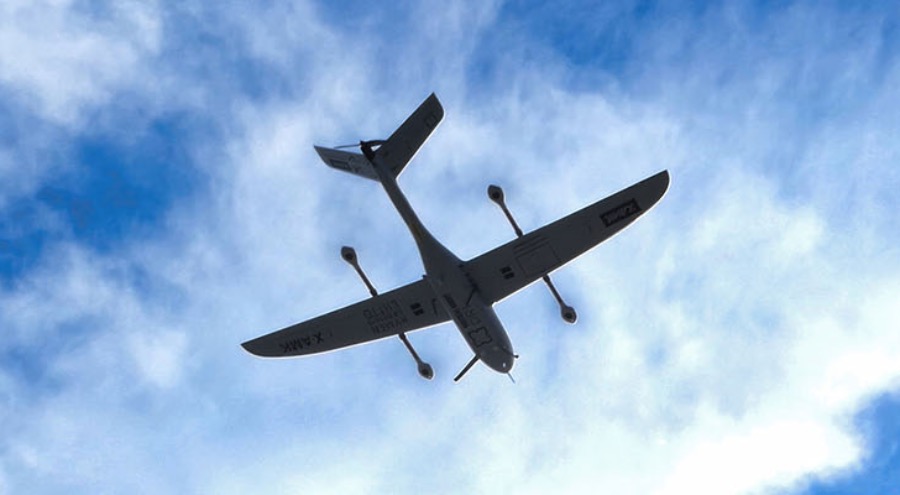
The role of drones in the security environment has changed rapidly. A few years ago, small drones were mainly associated with aerial photography, recreational flying and perhaps reconnaissance of specific locations. Events in recent years have demonstrated how drone technology can also be used in a wide range of hybrid operations and armed activities.
“Drones have become a multifaceted security and protection challenge. Technology has developed rapidly, and the number of drones in use has increased. Their capabilities, applications and the threats they pose are constantly evolving,” says Antti Kauppinen, Chief Technology Officer at Erillisverkot.
Potential drone targets include government facilities, airports, seaports, energy and telecommunications networks, railways, water supply infrastructure and other assets critical to the functioning of society. Geographic location does not determine vulnerability, as drones can be transported close to a target and operated locally.
“Operators of critical infrastructure may be able to establish sufficient detection and protection capabilities independently using their own surveillance systems. However, isolated solutions do not provide a broader understanding of what is happening across the country. A wider situational picture is needed to serve the needs of the authorities,” says Antti Kauppinen.
“Rather than focusing on an individual drone, we need to see the bigger picture: what is happening in the surrounding environment, where the device is coming from and where it may be heading. The more effectively different data sources can be integrated, the more reliably the situation can be assessed and the better the authorities’ response can be directed,” explains Timo Lehtimäki, CEO of Erillisverkot.
One technology that has attracted increasing attention in recent years is ISAC (Integrated Sensing and Communication), which combines the communication and sensing capabilities of mobile networks. As a feature of future 6G technology, ISAC enables networks to detect changes in their surrounding environment in addition to transmitting data. It can identify moving objects, such as vehicles, people and drones, without requiring a transmitter or other active device on the object itself.
In Finland, the potential of this technology has been demonstrated, among other initiatives, through a technology demonstration conducted by Ericsson, based on a solution developed using 5G. Drone detection is currently the most prominent use case, but the technology can also be applied to traffic monitoring, critical infrastructure surveillance and the detection of anomalous events.
“ISAC alone cannot provide a complete situational picture. The data it generates should be combined with observations from radar systems, cameras, radio-frequency sensors and positioning systems, for example. Information gathered from across society can help identify anomalies and patterns that cannot be inferred from an individual sensor alone,” says Lehtimäki.
There is a clear division of responsibilities between detection and countermeasures. Networks, sensors and analytics can provide an accurate situational picture, but decisions on potential countermeasures rest with security authorities operating under official accountability.
“The value of a system does not lie solely in detecting an object in the air. What matters is whether the observation can be used to assess the seriousness of the situation and initiate proportionate action,” Lehtimäki emphasises.
Building this capability requires more than technology. It also depends on secure data-centre and computing capacity, analytics and clearly defined operational procedures. Security-critical data must remain securely under trusted control throughout the entire process.
“Drones are just one element of an evolving threat environment, but their detection can no longer be overlooked when protecting critical infrastructure. Comprehensive detection capabilities are not a vision of the distant future; they are a practical necessity arising from a rapidly changing security environment,” says Lehtimäki.
Image Credit: Markus Lintu